
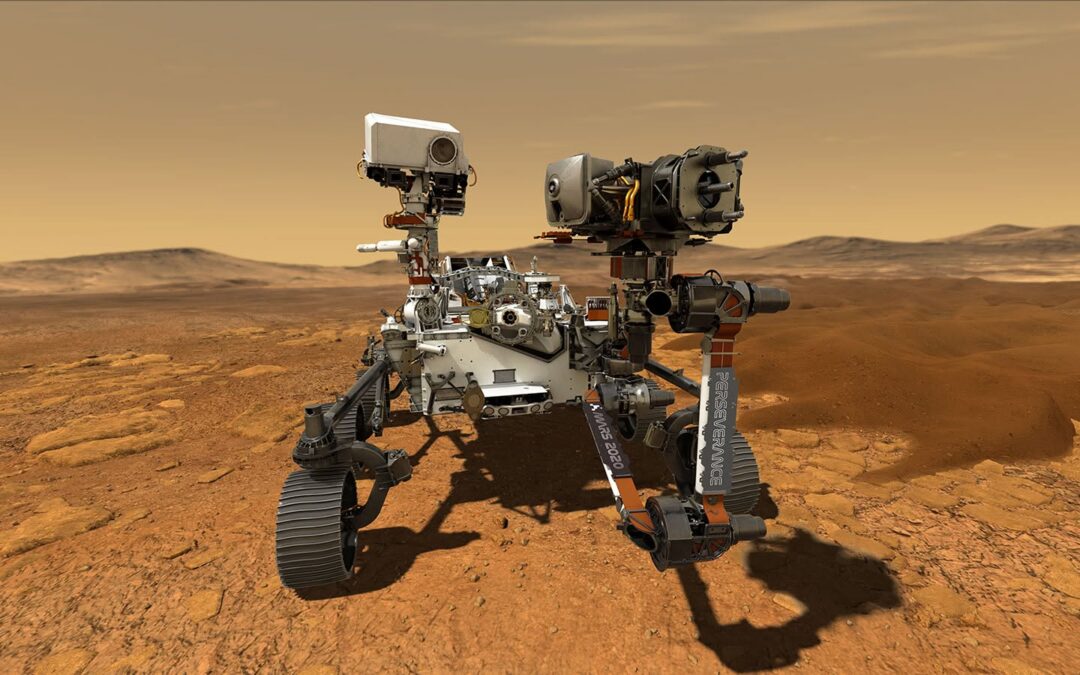
A planetary geologist from the University of Iowa is part of a team using one of NASA’s rovers on Mars that’s found the makings for precious gems like rubies and sapphires in the Martian soil.
Valerie Payré, a professor in the UI’s School of Earth, Environment, and Sustainability, says they’ve identified what’s known as corundum on Mars, which is a landmark discovery.
“It’s the first time we’re observing it at the surface of Mars, so we were not expecting it at all,” Payré says. “It’s made of just aluminum and oxygen, and it’s the family name of rubies, sapphires, so all of those gems that are highly used on Earth for jewels. So yeah, this was a big surprise because even on Earth, it’s not that common.”
She’s closely following another NASA mission which is sending a spacecraft called Psyche to a distant asteroid, also called Psyche, which is floating between Mars and Jupiter. That mission is studying the possibility of doing robotic mining for high-demand metals like copper, cobalt and platinum on asteroids, though the orbiter Psyche won’t reach its namesake asteroid until 2029.
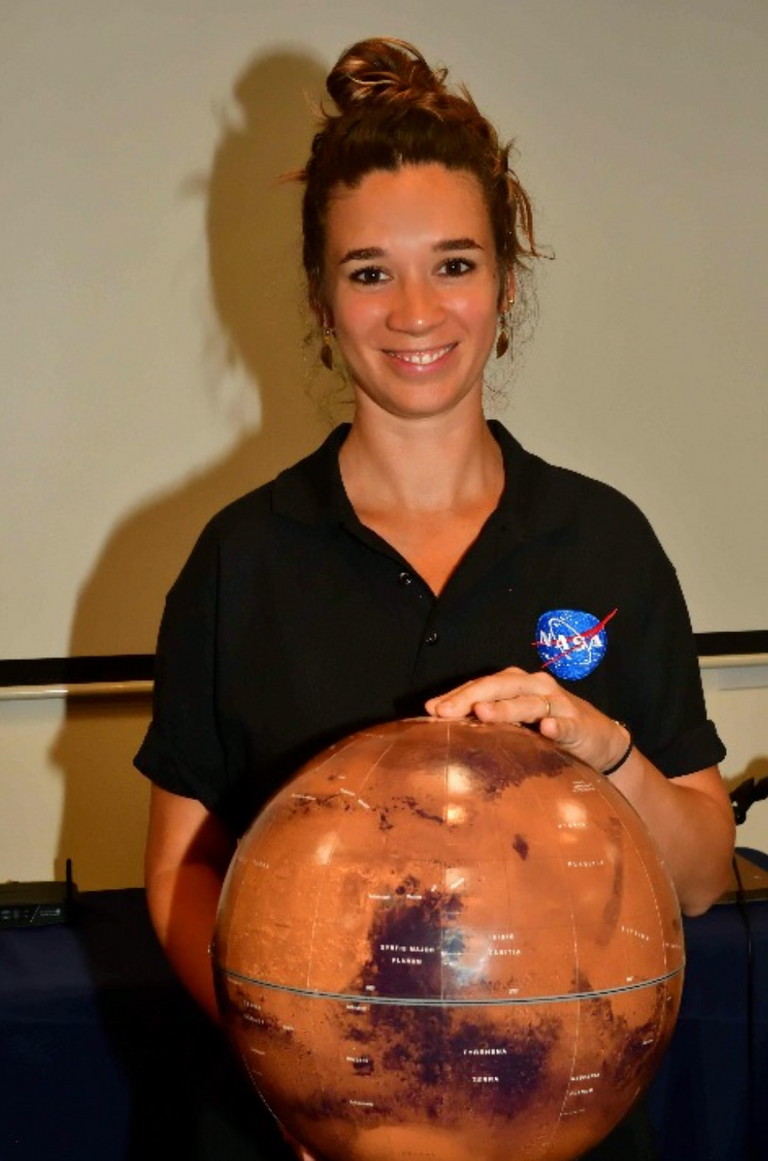
Valerie Payré (UI photo)
Does this latest discovery of corundum on Mars mean there’s future potential for the mining of gems on the Red Planet?
“It’s the only place on Mars we’ve found it and it’s also in a very small amount. So I don’t know if that’s a place where we could find a lot of corundum, at least where we could have some profit out of it,” Payré says. “So for now, I think it’s a fun discovery and there are some gemstones on Mars — that’s something we can say.”
Researchers report the rover Perseverance located corundum in Jezero (JEZ-ah-roe) Crater, which scientists believe is an ancient lake once fed by rivers. Payré is co-investigator on the NASA-funded SuperCam instrument team that made the discovery, and she’s hoping to continue remotely exploring Mars for as long as the six-wheeled rover survives the harsh climate and wind storms.
“Perseverance is very healthy right now. There is no issue with the rover. So we had an extended mission of two more years and we’ll continue to ask to extend it through the duration of the life of the rover,” Payré says. “Looking at the Curiosity rover, which is the big sister of Perseverance, it could last maybe 10 more years or something, so we’ll see how it goes.”
NASA’s next big mission is landing humans on the Moon again, and establishing a base that could be used as a launch pad for Mars. Payré says the rovers are great, but they’re no replacement for boots on the ground.
“I like robots, but for geology, it’s easier to have a human, human eyes, but also being able to walk to outcrops or rocks that we’re seeing at the surface of Mars,” Payré says. “It would be way more efficient to have a human on Mars do geology and explore the history of Mars.”
Read the full research report on the discovery of corundum on Mars here: https://agupubs.onlinelibrary.wiley.com/doi/10.1029/2026GL122537