
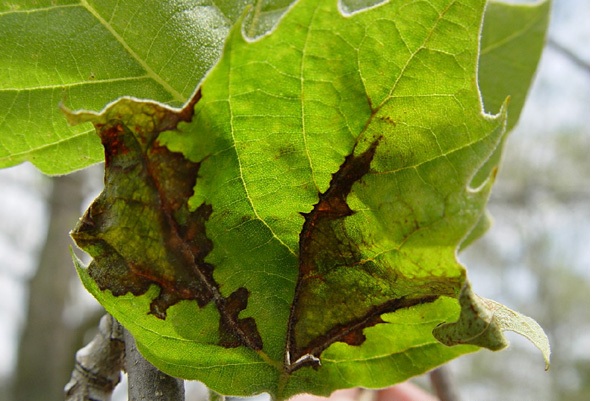
Some Iowa homeowners may notice the leaves on certain trees are turning yellow or brown and dropping earlier than usual this season.
According to the Iowa DNR, they could have a fungus called anthracnose, which thrives in wet conditions, like what we’ve had this summer.
The disease is affecting black walnut trees at an unusually high rate, but DNR forester Mark Vitosh says the fungus is -not- likely to impact a tree’s long-term health.
“Having some defoliation a little earlier than normal generally isn’t going to kill that tree,” Vitosh says. “It may set it back a little bit but since things are starting to shut down a little bit, they’ll be all right. They’ll come out next year and they’ll look pretty good.”
In addition to walnuts, anthracnose can impact sycamore, ash, maple, oak, walnut, linden, hickory, willows and other deciduous trees. Vitosh says spraying is unnecessary.
“I’ve been doing this a long time, and I see anthracnose every year, but I see it at different degrees, and we see the same thing on sycamore and others,” he says. “A lot of it’s weather related, and this year things kind of lined up well.”
A caterpillar is also affecting walnuts in some parts of the state. That, too, is unlikely to cause long-term damage as trees are winding down their growing season.
Vitosh made his comments on the Iowa Public Radio program “Talk of Iowa.”
(By Gavin McGough, Iowa Public Radio)