
State Climatologist Justin Glisan says the heat dome that settled over Iowa in August had an impact on both temperatures and the amount of rainfall.
“The average temperature preliminarily is about 1.2 degrees above the 30 year climatology. So warmer than average overall, but not exceedingly warm,” he says. Glisan says it will end up out of the top 25 in the record book for warmest August.
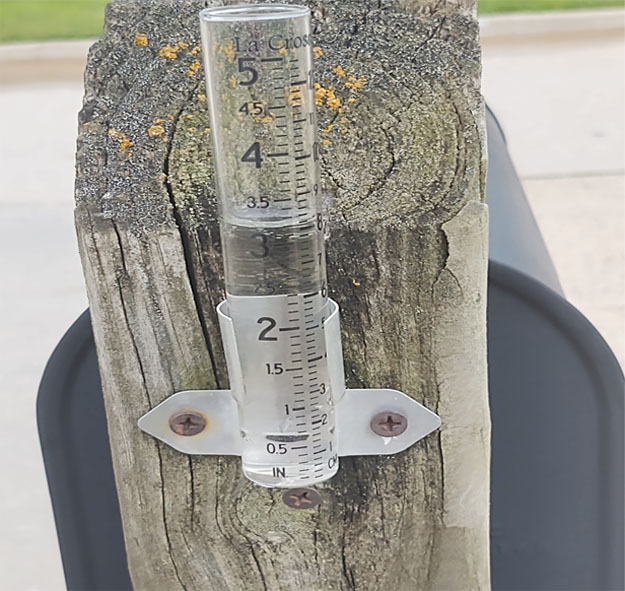
August averaged 5.25 inches of rainfall — about 1.2 inches above normal. Glisan says the heat dome determined where that percipitation fell, with the driest areas missing out again. “You look at the northwest corner of the state where we have D-1 moderate drought and some D-2 severe drought, precipitation deficits were on the order of one to three inches,” Glisan says.
He says the rain fell in swath from western to eastern Iowa that bent to the south. “Particularly from around Council Bluffs over to Des Moines, surplus rainfall totals anywhere from four to six inches above normal. And in the southeast corner as well, we’re seeing precipitation surpluses in the four to eight inch range. Also wetter conditions for much of eastern Iowa,” Glisan explains.
Glisan explains how the heat dome determined where the rains fall. “What it does, it’s like a forcing mechanism for what we call ridge riders. And they move around that ridge, and that’s where you see a swath across the upper Midwest going through Iowa where we saw above average rainfall,” he says. “So you can follow that arc of above normal precipitation. and that’s where the southern ridge set up and disturbances came over that ridge.” Glisan says that ridge also blocked out a lot of northern Iowa from the rainfall.
The heat dome has returned as we start September, and Glisan says the good news is the dome has shifted. “It’s a little further north. So the ridge riders are going to potentially impact the northern part of the state along the Minnesota border. So the drier part of the state in August may benefit from rainfall over the next seven days, perhaps half an inch to an inch and a half potentially,” he says.
Glisan says that could help out the drier areas of the state recover some of their moisture deficit.