May 21, 2013

State on pace to set a record for lack of tornadoes

Dark-CloudsThere have been a few watches, but no tornadoes have touched down in Iowa this year. In fact, it’s been almost a full year since Iowa’s seen a twister.

Meteorologist Jeff Johnson, at the National Weather Service, says the state’s about to set a new record for longest period of time for being tornado-free.

“We never thought we’d even come close to breaking this record,” Johnson says.

“The last tornado in Iowa was back on May 24, 2012 in Fayette County and in the central part of the state, you have to go all the way back to early May of last year, May 4th, there was one up in Winnebago County, so it’s been a long time since we’ve had a tornado in this area.”

In more than 60 years of keeping records on tornadoes in Iowa, he says there’s never before been a twister-free run this long.

Johnson says, “Tornado records go back to 1950 that are somewhat categorical and anything beyond 1980 would be much more accurate, but in that time period since 1950, if we get through Tuesday, it would be the longest stretch without a tornado in the state.”

There are two primary reasons why we have not been inundated with tornado warnings in the state for so many months. “First of all, last year we had the drought and that minimized the number of thunderstorms as well as severe weather,” Johnson says.

“This year, it hasn’t been the drought, in fact, we’ve been wet. It’s been the fact we’ve been under a very cool and wet spring which has not been conducive to storms which are capable of producing tornadoes either.” He warns, more than half of the typical year’s worth of tornadoes that hit Iowa appear in May and June.

By this date, in a normal year, the state would have already recorded 12 twisters.

By Pat Powers, KQWC, Webster City

More heavy rain, 58% of Iowa now out of the drought

Up to 3.5 inches of rain has fallen in some parts of Iowa since Wednesday morning.

National Weather Service Meteorologist Miles Schumacher says areas to the west and just north of Des Moines received the heaviest rain. “It looks like anywhere from three-quarters of an inch to an inch-and-a-half is pretty common. A band extending from just northwest of Des Moines toward the Council Bluffs area, two to three-and-a-half (inches) is quite common in a band maybe 50 miles wide there,” Schumacher says.

Statewide, total precipitation for the month of May is 1.5 inches above normal. This follows a month that was Iowa’s wettest April ever.

An update from the U.S. Drought Monitor this morning shows 58% of Iowa is now drought-free. “Most of the east half to two-thirds (of Iowa) is pretty much out of it,” Schumacher says. “In fact, we’ve had a couple category improvement in the west…the D2, which is severe (drought), is just barely touching the state. We’ve improved quite a bit this spring.”

All this rain has left farmers with little opportunity to plant corn, soybeans, and other crops. Schumacher says there should be a window of opportunity after today. “It looks like it is going to turn drier,” Schumacher says. “Most of the accumulating rains that we’re going to see from this system have already occurred. A few showers over the weekend, then we’ll probably stay dry until next Wednesday. So, a little bit of a drier pattern that what we’ve been in.”

High temperatures over the weekend are expected in the 50s to low 60s, but Schumacher says highs will climb into the 80s to near 90 by next Tuesday.


Soil tests show recharging of moisture in many areas

The area of Iowa where last year’s drought was most severe has gotten welcome moisture in recent weeks. Iowa State University’s spring survey in northwest Iowa found subsoil moisture levels rose five inches since tests last fall.

ISU extension agronomist Joel De Jong says some parts of the region are almost fully recharged. They “actually had numbers in the 8.5 to 9.5, almost 10-inch range in several of those counties,” De Jong says.

“Got up close to Minnesota and it was only a little over 6. A lot of those sites are actually getting pretty full.” April rains contributed greatly to rebuilding those levels, and Iowa set a new record high for precipitation on average statewide during the month.

De Jong says going further west, the levels drop a bit but are still show a fairly good recharge. The “lowest site was northwest, Plymouth County, not too far from the Big Sioux River, that was only at about 4.8 inches, so we could use some recharge there yet,” De Jong says. “Western Sioux County was under seven, Lyon County’s site was just a shade over seven.”

De Jong says at full capacity at the top five feet, between 10 to 11 inches of moisture is needed. He says even though planting has been delayed, there’s still plenty of time to get the corn in with May 20 being the target date.

By Jerry Oster, WNAX, Yankton

Five counties approved as presidential disaster areas

The president has approved Governor Terry Branstad’s request to designate five Iowa counties federal disaster areas. The counties named in the presidential declaration are Dickinson, Lyon, O’Brien, Osceola and Sioux for severe weather that hit April ninth through the 11th.

Those counties were hit with damaging winds, heavy rains, thunderstorms, freezing rain, ice and snow that caused damage to power lines, poles and trees. The declaration by the President will provide federal funding to the declared counties for repairing of damage to public property.

The Governor’s office says it also received notification that the Presidential Disaster Declaration includes funding to conduct hazard mitigation activities for the entire state to allow officials to work to minimize the impact of future natural disasters by taking steps now to strengthen existing infrastructure.

Rain and snow help wash away drought conditions

The recent rain and snow have played havoc with outdoor events and activities, but all the moisture has a positive side. Tim Hall of the Iowa Department of Natural Resources says moisture of any type is important after the severe drought that hit the state.

“This is exactly what we’d hoped for, is sustained long-term, better then normal precipitation during the months when we typically get a lot of rain anyway. And March and April and May are pretty wet months, and we are getting more than normal right in those months,” Hall says.

April set a new statewide average for rainfall at 6.52 inches, with normal rainfall for April at 3.51 inches. A new drought map comes out Thursday, and Hall expects to see the areas with severe problems continuing to shrink.

“We’re making some real improvement in the drought conditions in the state, and I think we’re gonna continue to see improvement in the near future,” according to Hall. Not only has the amount of rain increased, it is coming at a time where the frost is out of the ground — so the rain that falls or snow that melts — sinks into the soil.

“In fact our groundwater folks who work with a lot of the water utilities in northwest Iowa are starting to see that reflected in the water levels in some of the wells that are used to supply drinking water,” Hall says. “So we’re starting to see some gradual recovery in the levels in wells, which is indicative of the water making it down into the ground where it is going to do some real good.”

He says those areas that were not hit as hard by the drought are building up some reserve with the rains that’re falling now. Hall says that makes it less likely they’ll get back into a water shortage.

“I think if the rainfall stopped for a couple of weeks, which it probable will — I mean we go through periods where we don’t get rain for a couple three weeks — the real danger is if that rainfall slows down or stops and we get excessively hot where the demand for water also starts to go up in conjunction with the rain going down,” Hall says.

Hall says farmers are probably really hoping the rain will stop for awhile so they can get into the fields — but he says even they will be happy that all the moisture is replenishing the groundwater.

Iowa’s ag secretary says current weather is “crazy”

Iowa Agriculture Secretary Bill Northey says after this blast of wintry weather, Iowa farmers will have to wait until their fields dry out and warm up before they resume spring planting.

“A month ago, we thought we were going to have a dry year,” Northey says. “…Then we had the wettest April in 140-plus year, so it’s crazy.”

But Northey says there’s no cause for panic — yet.

“Folks have tools on their farms. They have tractors set up with GPS to be able to plant all night when the conditions get right again,” Northey says. “We’re going to want to get this corn in as quickly as we can once the conditions turn around.”

Northey says it “certainly feels like” the drought is over.  Northey made his comments during taping of the “Iowa Press” program that airs tonight at 7:30 on Iowa Public Television.

Northey intends to plant 300 acres of corn and 300 acres of soybeans on his farm near Spirit Lake — after the snow melts and subsoil temperatures rise.

Pella Tulip Festival handles snowstorm on opening day

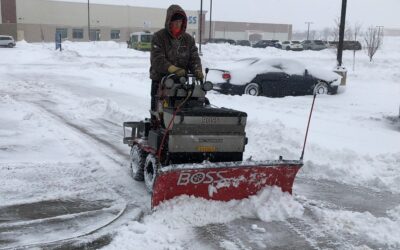
Organizers of the Pella Tulip Festival seem to be taking the sudden shift to winter weather in stride. The event opened Thursday as the rare May snowstorm spread across the state. Tulip festival spokesman, Dick Redman, says the red, yellow, orange and other colored tulips were out right on time, as the weather worked out so that a lot of the tulip beds had opened up just this week.

Some of the events were canceled Thursday, and Redman says they’ll keep things on schedule as much as they can. “We just have to go kind of day-by-day with our weather plans, we were thinking with the colder weather like this people could just bundle up with coats. Rain will really be a reason for a decision on what we will cancel,” Redman explains.

He says there are a lot of things inside to see, including demonstrations on Dutch chocolate making to Dutch costumes and how they plant the tulip bulbs. Redman says even with the uncharacteristic winter storm Thursday, there were still several tour buses of people who stopped to see the tulips and visit the demonstrations.

“So, I think that there’s a lot of people that are just coming to enjoy a lot of the things that are inside and to just see some tulips and spend some time,” Redman says. He is like a lot of other people who can’t remember an opening day of the annual festival where they had a snowstorm.

“I would have to say no. I remember some cold times, but this I think is pretty unique,” Redman laughed. “So I guess that is another reason to come to town, so you can say, ‘you know, when it snowed at tulip time, I was there’.”

It’s a complete turnaround from last year when unseasonably warm weather prompted the tulips to emerge early and most were done blooming by the opening of the festival.

You can find out more about the festival at www.pellatuliptime.com.